

Schools need reliable audio tools for testing, reading, language learning, and multimedia lessons—but budgets are often tight. This guide covers budget-friendly classroom audio solutions across common use cases, including wired headphones, USB headsets, earbuds, listening centers, and select wireless options where they truly make sense.
If you’re building out stations or buying for a full classroom, you may also want to browse Classroom Packs for standardized sets and easier storage.
Quick Takeaways
- Budget range: From low-cost student earbuds to multi-student listening systems
- Durability matters: Reinforced cords and classroom-grade build reduce replacements
- “Wireless” isn’t always better: It adds flexibility, but also charging and device management
- Classroom packs often win on value: Better per-unit cost and easier organization
- Compatibility is key: 3.5mm vs USB depends on your device fleet (Chromebooks, desktops, tablets)
How to Choose the Right Audio Solution
Before buying, match the gear to the classroom task:
- Testing & assessments: Simple, low-cost earbuds or durable 3.5mm headphones
- Daily classroom listening: Comfort + durability (adjustable fit, padded earcups)
- Remote learning / speaking activities: Headsets with microphones (often USB for Chromebooks)
- Small groups: Listening centers that let multiple students hear the same source
- Flexible setups: Wireless is helpful when cords create clutter or limit movement
1) Califone NeoTech Plus Headphone
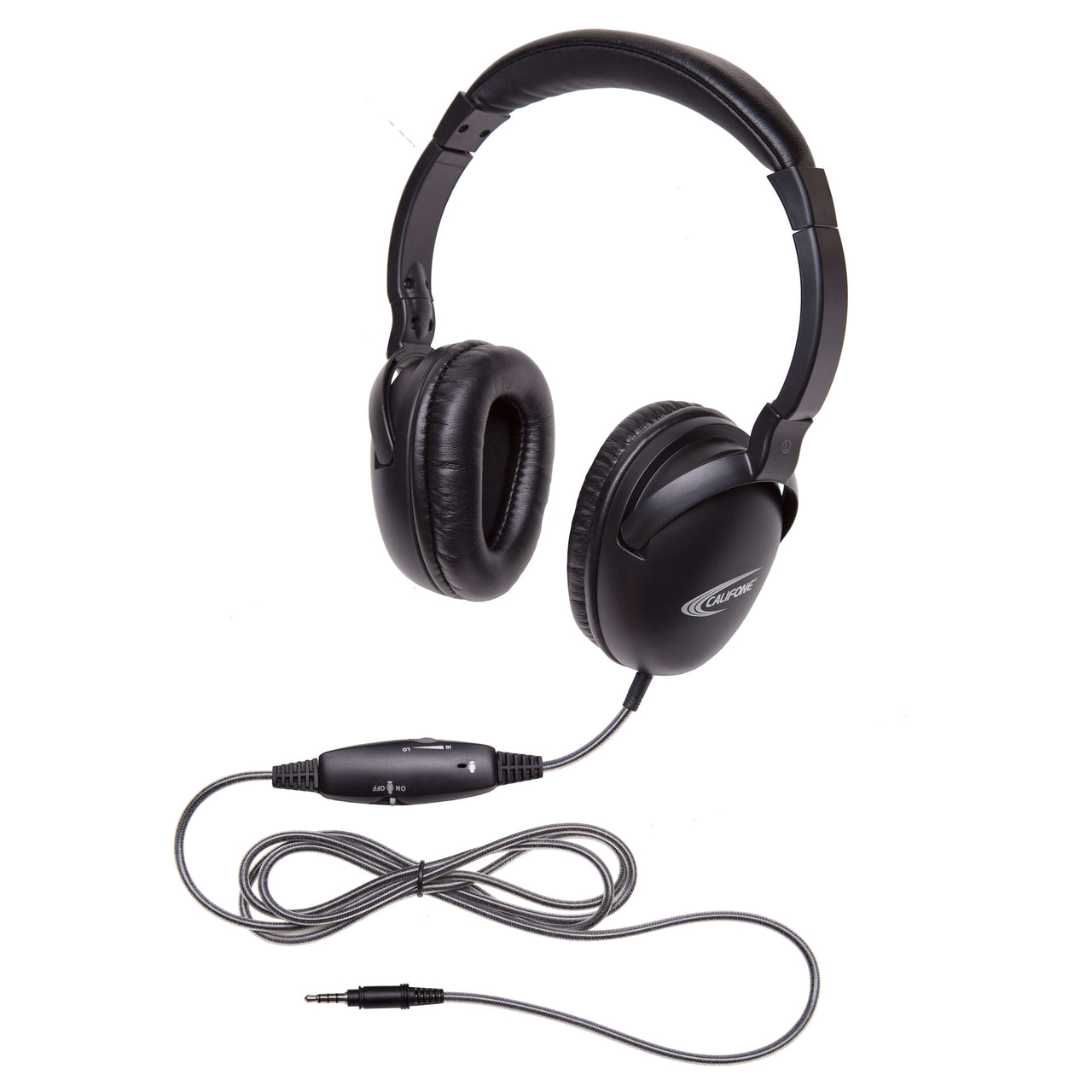
A comfortable, classroom-friendly option for longer listening sessions. Works with a standard 3.5mm connection, so it fits most school devices.
Best for: daily classroom listening, literacy stations, and computer lab use.

2) Califone NeoTech Plus Headset with In-Line Mic
A durable headset for listen-and-speak activities. The in-line microphone is easy for students to use, and the reinforced cord supports heavy classroom wear.
Best for: speaking practice, language learning, and interactive software that requires student voice input.
3) USB Advanced School Headset
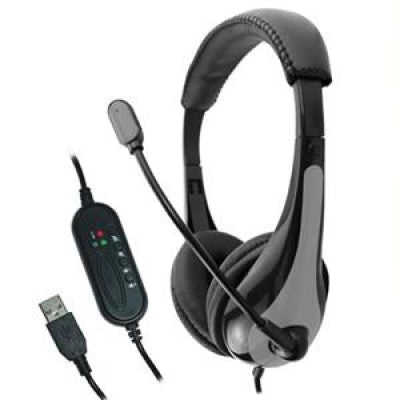
A straightforward headset that connects via USB, making it an easy fit for many school desktops and Chromebook setups (depending on port availability and device policies).
Best for: computer labs, testing platforms that require a mic, and remote learning workflows.
4) SchoolMate Deluxe Stereo Headphone
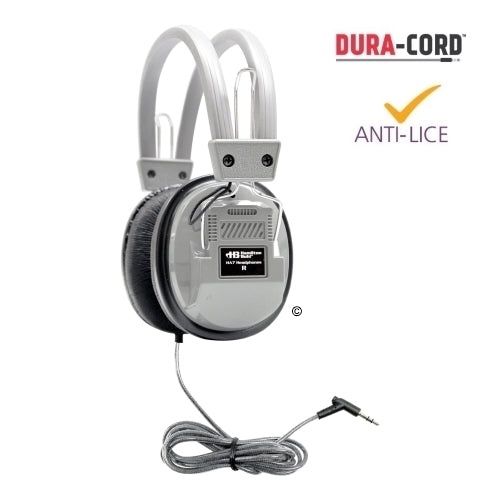
A strong budget pick for everyday classroom listening. Uses a standard 3.5mm connection and offers adjustable sizing for shared use.
Best for: classroom stations, basic listening tasks, and budget bulk purchasing.
5) School Earbud AE-215
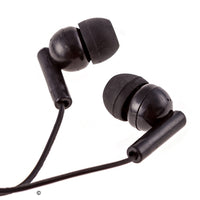
A low-cost option ideal for one-to-one distribution (especially helpful for testing and hygiene policies). Uses a 3.5mm plug for broad device compatibility.
Best for: testing days, student take-home needs, and high-volume distribution.
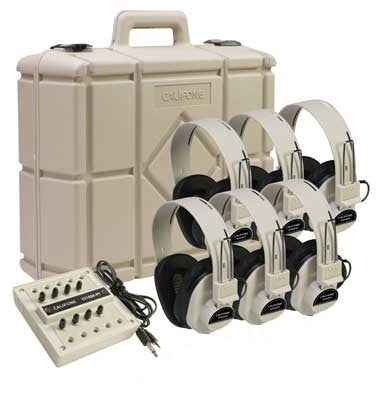
6) 8-Position Listening Center with Headphones and Case
A practical way to run small-group listening without buying individual players. Multiple students can listen to the same audio source at once, and the included case helps keep equipment organized.
Best for: reading groups, language stations, intervention blocks, and shared listening activities.
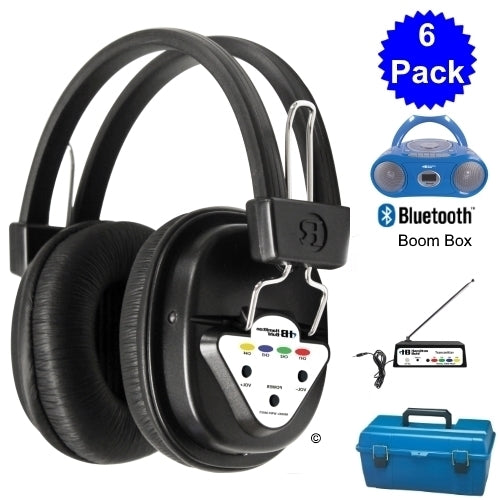
7) Wireless 6-Person Listening Center with Bluetooth Boombox
If you truly need wireless flexibility, this system supports small-group listening without cords between the hub and students. It’s a higher-cost option, but it can simplify setup in mobile classrooms or spaces where cords create clutter.
Best for: language labs, music listening, and flexible group stations where mobility matters.
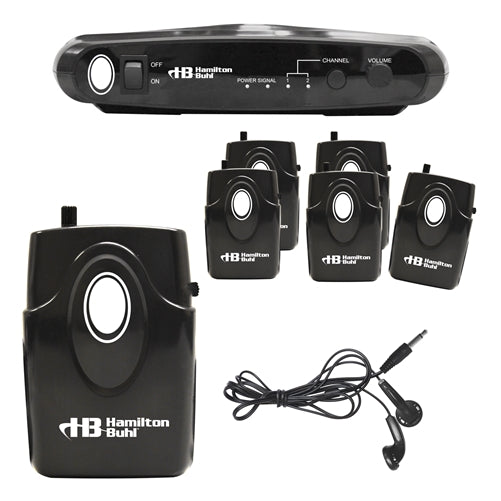
8) Assistive Listening System ALS700
An assistive listening system designed to improve clarity for students who need additional hearing support. Teachers use a transmitter while students use receivers to hear instruction more clearly.
Best for: accessibility support, large rooms, and situations where instruction clarity is critical.
9) When Wireless Makes Sense (and When It Doesn’t)
Wireless can be a great fit in classrooms that prioritize flexibility, but it comes with tradeoffs. Consider wireless if you:
- Need to reduce cord clutter and trip hazards
- Use mobile learning stations or flexible seating
- Want faster setup for rotating small groups
Wired may be the better choice if you want minimal device management. Wired audio solutions typically:
- Require no charging
- Reduce troubleshooting (pairing and connectivity)
- Simplify storage and checkout routines
If you’re exploring options, you can browse Wireless Headphones to compare form factors and classroom-ready features.
10) Classroom Packs: The Best Value for Many Schools
For standardization and cost control, classroom packs can be a better long-term strategy than mixing single units. Packs often simplify purchasing, inventory, storage, and replacement planning.
Browse: Classroom Packs or consider student-distribution needs via Earbud Packs.
Conclusion: Choosing the Right Classroom Audio Setup
The best audio solution depends on how your school teaches and tests. Focus on:
- Durability: classroom-grade build that withstands daily use
- Ease of use: simple setup for teachers and students
- Compatibility: 3.5mm vs USB based on your devices
- Value: the best long-term cost, not just the lowest price
A smart mix of reliable wired gear, appropriate headsets, and targeted group systems can improve focus, accessibility, and engagement—without overspending.
Supporting educators with practical, classroom-ready audio solutions.
Frequently Asked Questions
Are these all wireless audio solutions?
No. This list covers a range of classroom audio solutions, including wired headphones, USB headsets, earbuds, listening centers, and select wireless options where wireless flexibility is a real benefit.
What’s the most budget-friendly option for testing?
Many schools use low-cost student earbuds for testing days because they’re easy to distribute and support one-to-one use. For shared devices, durable wired headphones are also a strong option.
Should schools choose 3.5mm or USB?
Choose based on your device fleet. Many tablets and some laptops use 3.5mm (or require adapters), while many desktops and Chromebook environments support USB headsets. Confirm ports and policies before purchasing in bulk.
When does wireless make sense in schools?
Wireless can help in flexible seating setups, mobile learning stations, or areas where cords create clutter. Keep in mind that wireless adds charging and device management, so it’s best used where mobility is truly needed.
Are classroom packs worth it?
Often, yes. Classroom packs can reduce per-unit costs, simplify purchasing, and help with storage and checkout routines. They’re a strong choice for standardizing equipment across a classroom or grade level.
0 comments